








Christmas isn’t just a holiday — in the United States, it’s a season, a feeling, a tradition, and for millions, the happiest time of the year. From sparkling lights to family dinners, from Christmas trees to Santa hats, this festival has changed the mood of winters for centuries.
But Christmas didn’t start the way we see it today.
In fact, the modern American Christmas — filled with gifts, movies, gingerbread cookies, and Santa Claus — took thousands of years to evolve.
So, let’s take a deep, warm, storytelling-style journey through time and uncover the full story of Christmas — how it started, where it truly came from, why people celebrate it on December 25, and how it transformed into the biggest holiday in the United States.
⭐ 1. What Exactly Is Christmas?
At its core, Christmas is the celebration of the birth of Jesus Christ, the central figure of Christianity. But in the US today, Christmas is celebrated by Christians, non-Christians, and even people who simply love the festive vibes.
Christmas in America means:
- Decorating the Christmas tree
- Lights on houses
- Family gatherings
- Exchanging gifts
- Baking cookies
- Watching holiday movies
- Secret Santa at workplaces
- Listening to Mariah Carey
- Hot cocoa nights
- Snowy adventures
- Church services
- Volunteering and charity
It’s not just a holiday — it’s a cultural celebration that brings people together.
⭐ 2. The Real Beginning: Christmas Is Older Than Christianity
Here’s the surprising truth:
Christmas is built on traditions older than Jesus’s birth.
❄️ Ancient Winter Festivals
Thousands of years ago — long before Christianity — ancient societies celebrated the Winter Solstice around December 21–22. This was the shortest day and the longest night of the year.
When the sun began returning, people celebrated with:
- Feasts
- Fire rituals
- Evergreen decorations
- Singing and dancing
- Gift exchanges
The most notable festivals were:
🔹 Saturnalia (Ancient Rome)
A week-long festival filled with:
- Feasting
- Singing in public
- Trading gifts
- Decorating homes with greenery
- Street celebrations
If you feel this looks like modern Christmas… you’re right!
🔹 Yule (Norse & Germanic People)
This included:
- Yule logs
- Evergreen trees
- Feasting
- Hunting
- Lighting fires to welcome the sun back
Many of our Christmas customs come directly from these traditions.

⭐ 3. Why Was December 25 Chosen?
Here’s a fun fact:
The Bible never mentions the date of Jesus’s birth.
So why December 25?
Historians agree on two major reasons:
🔹 1. To align with existing winter festivals
Early Christians chose December 25 because people already celebrated during this time. This made it easier to integrate Christianity.
🔹 2. Symbolism of light returning
Jesus was considered the “light of the world,” and celebrating His birth right after the darkest night carried spiritual meaning.
By the 4th century, December 25 was officially recognized as Christmas Day.
⭐ 4. How Christmas Spread Across the World
Once December 25 was accepted, Christmas spread quickly across Europe.
Local cultures added their own flavors:
- Germany brought decorated trees
- England added feasts and carols
- Italy contributed nativity scenes
- The Dutch brought Sinterklaas
- Scandinavian countries popularized Yule decorations
Christmas became a mix of religion, culture, food, and winter celebration — just like today.

⭐ 5. How Christmas Arrived in America
Christmas came to the United States through European settlers.
🇬🇧 British settlers
Brought Christmas puddings, carols, and church traditions.
🇩🇪 German settlers
Influenced the US heavily with:
- Christmas trees
- Ornaments
- Gingerbread houses
- Advent traditions
🇳🇱 Dutch settlers
They brought Sinterklaas, the root of modern Santa Claus.
❌ FUN FACT:
Christmas was actually banned in Puritan New England for years because it was considered too “joyful.”
But by the 1800s, Christmas made a massive comeback.
⭐ 6. The 19th Century: When Christmas Became the Holiday We Know Today
The 1800s changed everything.
🎄 Charles Dickens & “A Christmas Carol”
This book transformed Christmas into a warm, family-centered celebration. Themes like:
- generosity
- kindness
- family unity
became the heart of the holiday.
🎄 Queen Victoria & Prince Albert
Their Christmas tree photos with the royal family inspired Americans. Soon, almost every home in the US had a decorated tree.
🎄 Clement Clarke Moore’s Poem
The poem “A Visit from St. Nicholas” (’Twas the Night Before Christmas) shaped Santa’s modern image:
- A jolly man
- Flying reindeer
- Magical gift delivery
- Chimney entry
- Naughty and nice list
Modern Christmas was officially born.

⭐ 7. Who Is Santa Claus Really? The Full Story
Santa’s story is a global mix:
🎅 Saint Nicholas (4th century)
A generous bishop known for helping the poor & giving gifts.
🎅 Dutch “Sinterklaas”
Brought to America by Dutch settlers.
🎅 The Modern Santa (USA)
The American version of Santa — jolly, round, red-suited — was developed in the 1800s and popularized through:
- Newspapers
- Illustrations by Thomas Nast
- Coca-Cola ads in the 1930s
- Television and movies
Today, Santa represents:
- joy
- kindness
- childhood wonder
- giving

⭐ 8. Symbolism Behind Christmas Traditions
🎄 Christmas Tree
Evergreen trees stay green during winter → symbol of life and strength.
A German gift to America.
✨ Lights & Candles
Represent hope and returning sunlight.
❤️ Mistletoe
Symbol of peace and love — hence the kissing tradition.
🕊 Wreaths
Circular shape = eternity and unity.
🧦 Stockings
Based on a legend where Saint Nicholas dropped coins inside socks.
🎁 Gifts
Inspired by the Biblical “Three Wise Men” and old winter traditions of gift exchanges.
⭐ 9. How Christmas Is Celebrated Today — Especially in the USA
If there’s one country where Christmas feels magical, it’s the United States.
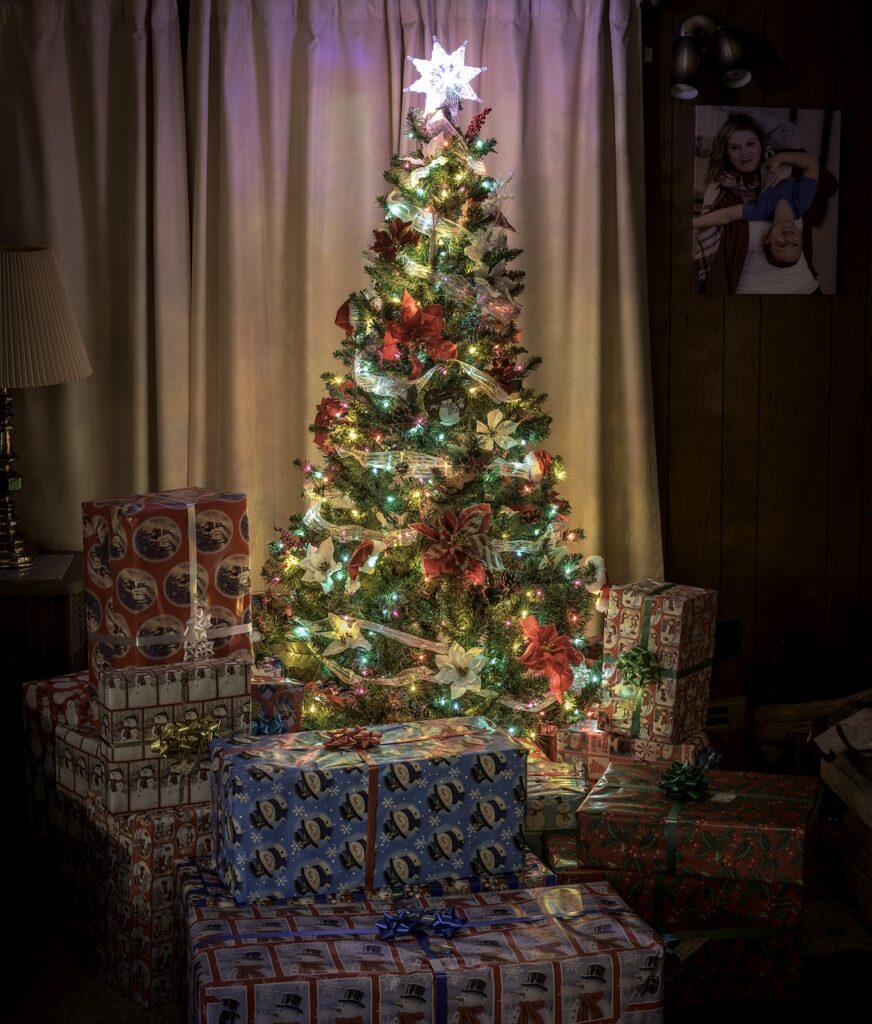
Modern American Christmas includes:
🏠 Home Decorations
- Christmas lights on houses
- Trees covered in ornaments
- Wreaths on doors
- Winter villages
- Inflatable Santa and reindeer
👪 Family Traditions
- Opening gifts on Christmas morning
- Christmas Eve dinners
- Hot chocolate nights
- Baking cookies together
- Reading Christmas stories
🎉 Parties & Events
- Office Secret Santa
- Ugly sweater parties
- School Christmas programs
- Christmas parades
🍽 Food
- Roasted turkey or ham
- Mashed potatoes
- Cranberry sauces
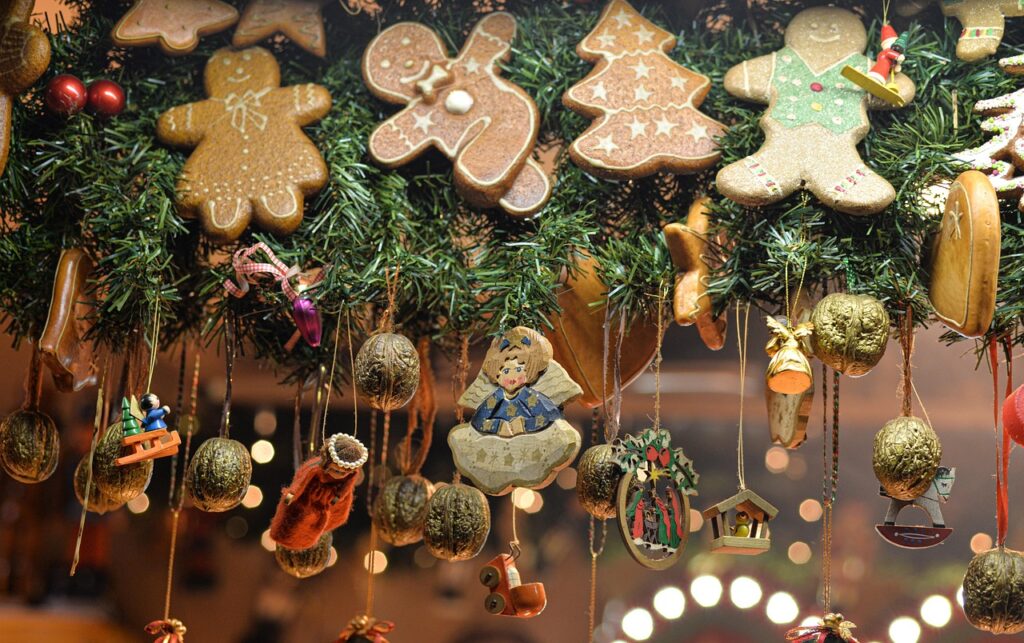
- Gingerbread cookies
- Peppermint treats
- Eggnog
🥰 Movies & Music
Americans rewatch classics like:
- Home Alone
- Elf
- The Grinch
- The Polar Express
And enjoy songs like:
- “Jingle Bell Rock”
- “Last Christmas”
- “All I Want For Christmas Is You”

⭐ 10. Christmas Around the World
Christmas may have one name, but it looks different everywhere:
🇬🇧 United Kingdom
Crackers, puddings, royal speeches.
🇲🇽 Mexico
Las Posadas, piñatas, family feasts.
🇩🇪 Germany
Iconic Christmas markets.
🇯🇵 Japan
A unique tradition — KFC dinner for Christmas.
🇦🇺 Australia
Summer beach barbecues since Christmas happens in summer.
🇮🇹 Italy
Feast of the Seven Fishes.
These traditions add flavor to global Christmas celebrations.
⭐ 11. Why Christmas Became the Biggest Holiday in the USA
There are several reasons why Christmas dominates American culture:
- Emotional connection
- Beautiful decorations
- Childhood nostalgia
- Movies and pop culture
- Commercial influence
- Holiday shopping season
- Family bonding
- Warmth during cold winter
Above all, Christmas gives people a reason to pause, reflect, and appreciate life.
⭐ 12. The Economic Power of Christmas
Christmas is the biggest consumer holiday in the US.
It boosts:
- retail sales
- e-commerce
- travel
- restaurants
- events
- entertainment
Billions of dollars are spent during the holiday season, making it crucial for the economy.
⭐ 13. What Christmas Means Today
For different people, Christmas means different things:
🎄 For families
Togetherness and love.
🎄 For children
Magic, gifts, wonder, Santa.
🎄 For Christians
The birth of Jesus and spiritual reflection.
🎄 For everyone else
A season of positivity, generosity, and celebration.
Regardless of beliefs, Christmas spreads joy.
⭐ 14. Final Thoughts: Why Christmas Remains Timeless
Christmas has survived:
- centuries of change
- cultural transformations
- global shifts
- modern lifestyles
And it still remains the most celebrated holiday in America and around the world.
Why?
Because Christmas is more than a date.
It’s a feeling — of love, hope, warmth, and joy.

And as long as people seek connection, kindness, and magic, Christmas will always remain special.











+ There are no comments
Add yours