









A few weeks ago, my cousin sent me a TikTok at 1 a.m. with the caption “this is literally me.” It was a guy doing jaw exercises in his bathroom mirror, chewing on something called mastic gum, talking about how he was “looksmaxxing” for the summer. I laughed, sent it to the group chat, and moved on with my life.
Then I started seeing it everywhere. Not just the jaw thing — the whole suffix. Sleepmaxxing. Studymaxxing. Fibermaxxing. Even “mewing,” which apparently counts as a sub-category of looksmaxxing now. My For You Page had quietly turned into a masterclass in optimizing every square inch of a human being, and somehow I hadn’t noticed the shift until it was already everywhere.
So I did what I always do when something takes over the internet overnight — I went down the rabbit hole. And honestly? Underneath the goofy name and the mirror selfies, there’s something real going on here. “Maxxing” isn’t just another fifteen-second trend that’ll be forgotten by September. It’s a mindset, and depending on how you use it, it can either wreck you or genuinely change your life.
Okay, But What Actually Is “Maxxing Trend”?

Strip away the slang and it’s simple: maxxing trend means taking one specific area of your life and pushing it to its absolute limit, on purpose, with intention. Not “I’ll try to sleep better.” Maxxing Trend. As in, you research sleep architecture, you buy blackout curtains, you track your REM cycles, you cut caffeine at noon, and you treat your bedroom like a lab.
The suffix started in looks-focused corners of the internet — young men obsessing over jawlines, posture, skin routines, hairlines — and it was honestly a little toxic in its early form. A lot of it read like insecurity dressed up as self-care. But somewhere between 2024 and now, the concept escaped that niche and mutated into something much bigger. People started applying the same all-in intensity to things that actually matter: sleep, focus, nutrition, money, relationships.
That’s the version blowing up right now. Not “how do I look hotter,” but “how do I optimize this one part of my life so aggressively that the results become undeniable.”
Maxxing Trend : Why It’s Exploding Right Now

A few things are colliding at once, and honestly, it makes sense that this is the moment maxxing took off.
First, there’s trend fatigue. If you’ve spent any time on social media over the last couple of years, you’ve watched a hundred different “aesthetics” come and go — clean girl, that girl, cottagecore, dark academia — each one promising an identity you could buy your way into. People are tired of performing a vibe. Maxxing Trend doesn’t ask you to look a certain way for the camera. It asks you to actually change a metric. Did your sleep score go up? Did your reading speed improve? Did your bench press numbers move? There’s no faking that.
Second, there’s the economy talking. Costs are up, job security feels shaky for a lot of people in their twenties and thirties, and there’s a real sense that mediocre effort doesn’t cut it anymore. Maxxing gives people a way to feel like they’re doing something about that uncertainty, even when the bigger economic picture is out of their hands. You can’t control the job market. You can control whether you did your studymaxxing session today.
Third — and I think this is the real reason it’s sticky — maxxing trend turns self-improvement into a game. Gamification works. Giving something a name, a hashtag, a “day 47 of my glow-up” video format taps into the same part of the brain that keeps people playing mobile games at 2 a.m. It’s self-improvement with a scoreboard.
The Good Version of Maxxing
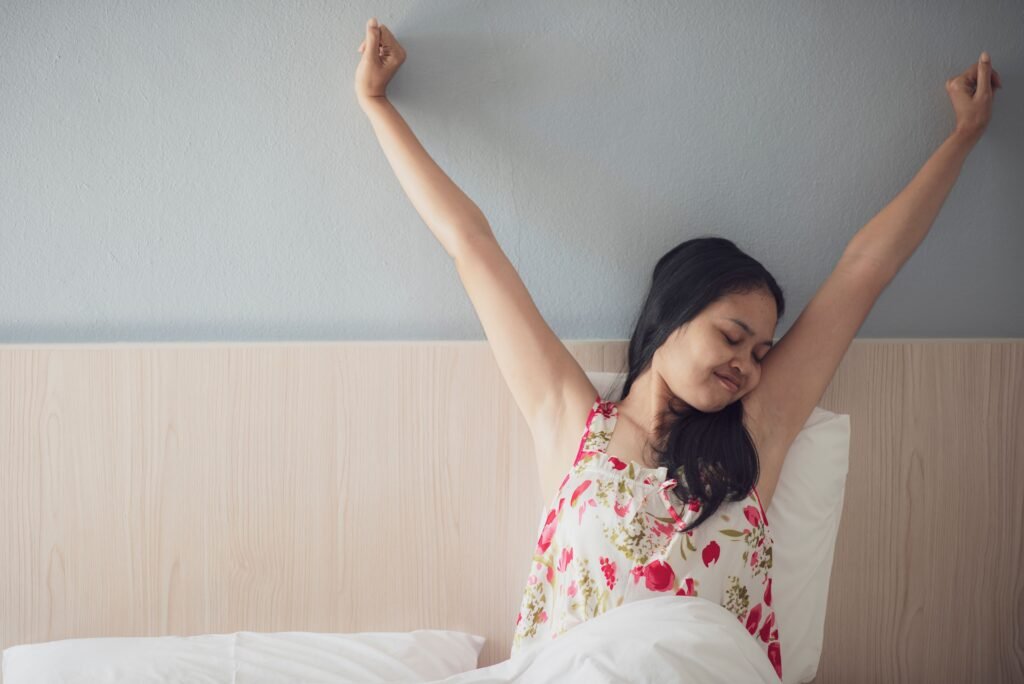
Here’s where I’ll push back on the people who want to dunk on this trend as pure vanity. Some of the maxxing sub-trends are genuinely solid habits wearing an internet costume.
Sleepmaxxing, at its core, is just consistent sleep hygiene — fixed bedtime, no screens an hour before bed, a cooler room, cutting late caffeine. Doctors have been saying this stuff for decades. It just never went viral before because it didn’t have a catchy name.
Studymaxxing is basically active recall and spaced repetition, techniques that have decades of cognitive science behind them, repackaged for an audience that would never click on an article titled “Evidence-Based Study Techniques.” Call it studymaxxing and suddenly it’s got twelve million views.
Fibermaxxing might be my favorite one, mostly because it’s so unglamorous. It’s just people trying to hit 30-plus grams of fiber a day because gut health content finally broke through to the mainstream. There’s nothing edgy about a chia seed pudding, but here we are.
The common thread in the good version: pick one domain, apply real information to it, track something measurable, and let the results speak. That’s not a gimmick. That’s just focused self-improvement with better marketing than it used to have.
Where It Goes Wrong
And then there’s the version that worries me a little, and if you’ve spent time in the wellness or fitness corners of the internet, you already know which one I mean.
Looksmaxxing forums can get dark fast. What starts as “let me improve my posture and skincare” can spiral into hours spent measuring facial symmetry, obsessing over jaw angles, and comparing yourself to filtered, algorithm-optimized faces that don’t represent reality. I’ve read threads where teenagers talk about their appearance with the clinical detachment of someone diagnosing a car problem. That’s not confidence-building. That’s a feedback loop that keeps score in a game you can never actually win, because the goalposts are set by comparison, not by any real standard.
The other trap is what I’d call maxxing burnout. If you decide to sleepmax, studymax, gymmax, and fibermax all in the same month, you haven’t built a lifestyle — you’ve built a part-time job monitoring your own existence. I tried a mini version of this myself back in the spring. I was tracking my sleep, doing a rigid study block system for a course I was taking, forcing down fiber I didn’t even want, and logging all of it in three different apps. By week two I wasn’t optimizing anything. I was just tired and irritable and mad at a chia pudding.
The lesson, at least for me, was that maxxing works when it’s one lane at a time. Optimization needs bandwidth, and bandwidth is finite.
How to Actually Use This Trend Without Losing Your Mind
If any of this resonates and you want to try it the smart way, here’s what I’d actually suggest, based on what worked (and what blew up in my face).
Pick exactly one thing. Not three. One. Whatever feels like the biggest lever in your life right now — sleep, focus, money, movement — start there and only there.
Define what “max” actually means before you start. Vague goals like “get healthier” don’t work here. You need a number or a behavior you can actually check off: seven hours of sleep, four days of the gym, one deep work session before noon. Maxxing only works because it’s measurable. Keep it measurable.
Give it a real trial period, not a lifetime commitment. Thirty days is enough to see whether a habit is sticking or whether you’re forcing something that isn’t sustainable. If it’s working after thirty days, keep going. If it’s making you miserable, that’s useful information too.
Watch for the comparison trap, especially with anything appearance-related. If you notice you’re spending more time looking at other people’s transformations than actually doing your own routine, that’s the moment to log off, not scroll further.
And maybe the most important one: remember that the algorithm rewards drama, not consistency. The viral maxxing videos show dramatic 90-day transformations, not the boring Tuesday where nothing much happened and you just did the routine anyway. Real change looks like a hundred boring Tuesdays in a row. Nobody posts that part, but that’s the part that actually works.
The Bigger Picture
What I keep coming back to is that maxxing isn’t really new — it’s just self-discipline with a 2026 accent. Every generation rebrands the same basic idea: consistency, measurement, and intention beat vague good intentions every time. Our grandparents called it “putting in the work.” We call it fibermaxxing and put a timer on it.

If you strip away the slang, the trend is honestly kind of encouraging. A whole generation that gets mocked for being glued to their phones is using those same phones to trade tips on sleep science, active recall, and gut health. That’s not nothing. The trick is choosing your lane, keeping score honestly, and remembering that the goal was never to win the internet — it was to actually feel better in your own life.
So if you’re going to max something out this year, max out one thing at a time, measure it honestly, and let the boring, unglamorous consistency do what it’s always done. That part of self-improvement never actually goes out of style, no matter what we decide to call it.







+ There are no comments
Add yours